A commercial fence has a job to do: keep people and equipment where they belong, control who comes and goes, and hold up to daily use for years. Choosing one starts with that job, not with a material. Once you know what the fence has to do, the type, the height, the gates, and the budget mostly fall into place.
This guide walks business owners, property managers, and contractors in Sparta, Cookeville, and the Upper Cumberland through the decisions that matter. It’s the starting point for our commercial fencing series. Each section links to a deeper guide when you’re ready for the details.
What Makes a Fence “Commercial”?
A commercial fence is built heavier than a backyard fence because it takes more abuse. Trucks back into it, forklifts brush it, gates open and close dozens of times a day, and someone may try to climb it.
In practice, that means:
- Heavier materials, like thicker fence wire and stronger posts and rails
- Deeper, wider footings for posts, especially at corners and gates
- Gates built for traffic, often wider, often automated
- Taller heights, usually 6 to 8 feet where local rules allow
- A written spec so you know exactly what you’re paying for
Chain link is the clearest example. Supplier Hoover Fence notes that commercial and industrial chain link uses larger posts and heavier-wall pipe than residential, and heavier fabric. The commercial chain link guide in this series breaks down gauge, posts, and coatings.
Start With What the Fence Has to Do
Before you compare materials, write down the fence’s main job. Most commercial properties fall into one or two of these:
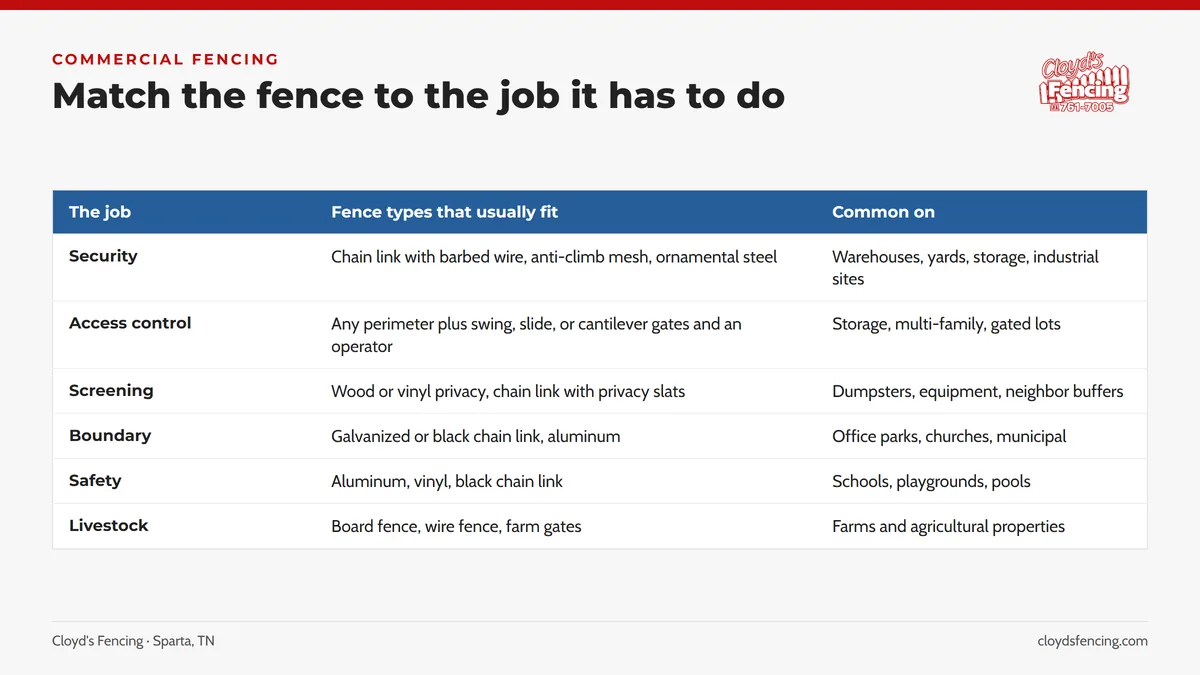
- Security: keep intruders out of a yard, lot, or building perimeter
- Access control: let the right people and vehicles in, and keep everyone else out
- Screening and privacy: hide equipment, dumpsters, or storage from the street
- Boundary: mark the property line and keep the public off the property
- Safety: keep kids, residents, or the public away from hazards like pools, parking lots, and drop-offs
- Livestock and agriculture: hold animals and protect pasture on farm and ag properties
A storage facility needs security and access control. An apartment complex may need safety fencing around a playground and screening around dumpsters. A school needs safety and a clean look from the street. Get the job right, and the rest of the decision gets simpler.
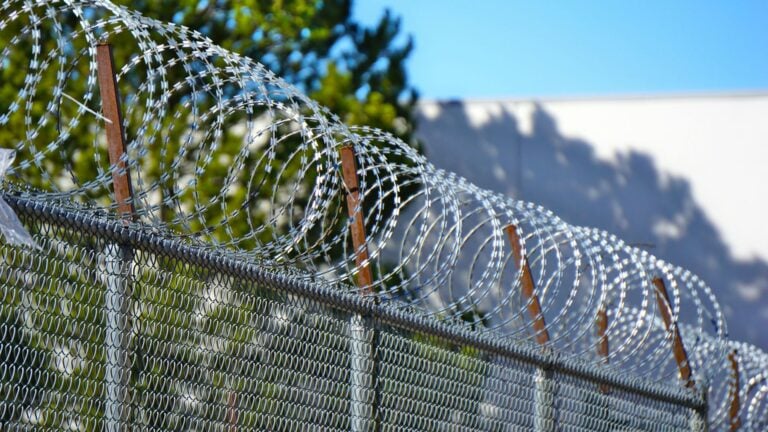
If keeping people out is the main job, start with our guide to security fencing for commercial properties. It compares barbed wire, razor wire, anti-climb mesh, and ornamental steel.
The Main Types of Commercial Fencing
Here’s how the common commercial options compare.
Chain Link
Chain link is the workhorse of commercial fencing. It’s cost-effective, strong, and see-through, so it doesn’t block sightlines for security cameras or patrols. It’s the most common choice for warehouses, industrial sites, storage facilities, and equipment yards.
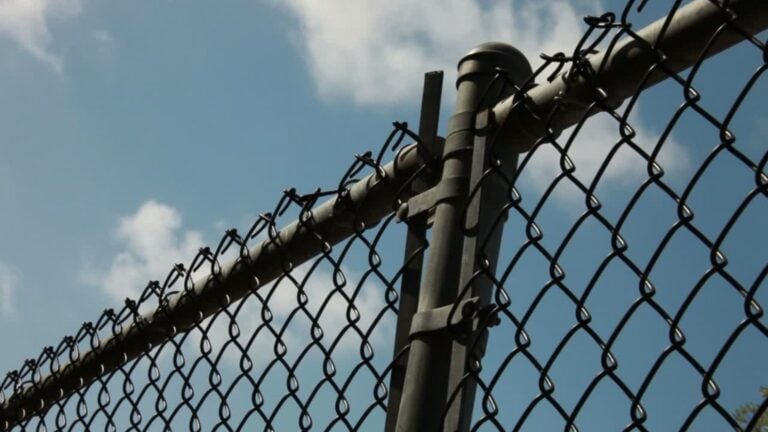
Commercial chain link comes in plain galvanized or black vinyl-coated, which looks cleaner from the street. You can add privacy slats for screening or barbed wire for security. Read the commercial chain link fence guide for gauge, post, and height choices.
Ornamental Aluminum and Steel
Ornamental fencing gives you a secure perimeter that still looks good from the road. That makes it a common choice for schools, office buildings, apartment complexes, and churches. Aluminum won’t rust and needs little upkeep. Steel is stronger and is usually the better pick where security matters most.

We installed the black aluminum fence at Spencer Elementary School, shown above. It keeps the campus defined and secure without making it look like a lockup.
Wood and Vinyl Privacy Fencing
Wood and vinyl are the go-to choices when you need to block the view: dumpster enclosures, equipment storage, or a buffer between a business and the homes next door. Vinyl needs less upkeep. Wood costs less up front and is easy to repair. Neither is a high-security fence on its own.

Vinyl also works well for safety fencing at multi-family properties, like this playground fence we built at an apartment complex.
Farm and Agricultural Fencing
Farms and agricultural businesses need fencing built to hold livestock and stand up to wide-open ground. That can mean board fence, wire fence, or a mix, depending on the animals and the land. If that’s your project, our services page covers the farm and agricultural fencing we install.
Gates and Controlled Entry
On most commercial properties, the gate gets more use than the rest of the fence put together. It’s also the weak point if it’s built or installed wrong.
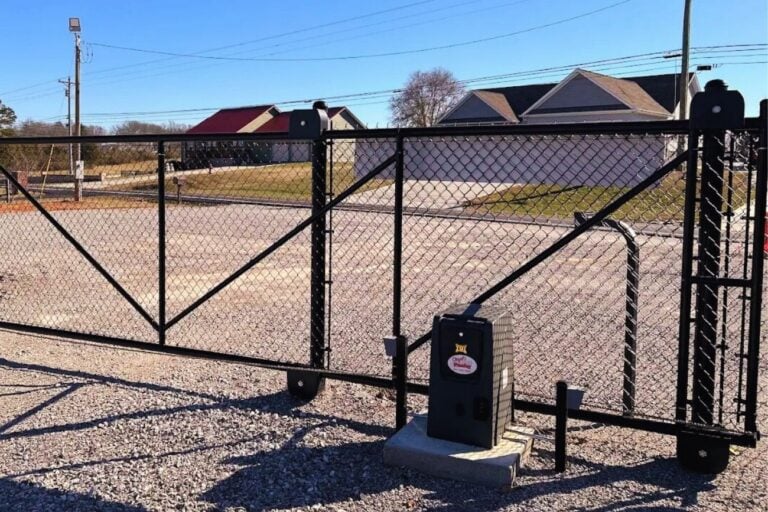
You’ll choose between swing gates, slide gates, and cantilever gates, then decide whether to automate it with a gate operator and how people will get in: a keypad, a card or fob, a remote, or a phone app. Space, traffic, and the slope of your entrance all affect the answer. Our guide to commercial gates and access control walks through each option.
What Drives the Cost of a Commercial Fence?
Every commercial fence is priced on its own site, so there’s no honest per-foot number we can give you without seeing the property. These are the factors that move the price:
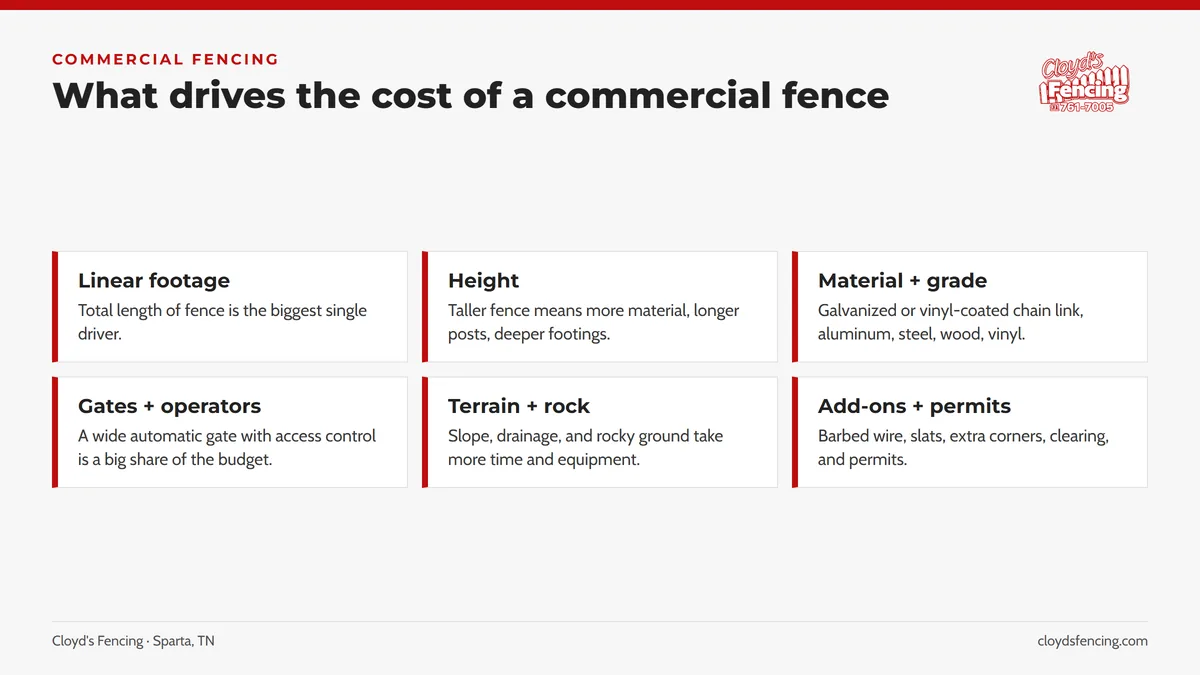
- Linear footage. The total length of fence is the biggest single driver.
- Height. Taller fence means more material, longer posts, and deeper footings.
- Material and grade. Galvanized chain link, vinyl-coated chain link, aluminum, steel, wood, and vinyl all price differently.
- Gates and operators. A wide automatic gate with access control can be a big share of a commercial budget.
- Terrain and rock. Slopes, drainage, and rocky ground take more time and equipment.
- Add-ons. Barbed wire, privacy slats, and extra corners all add cost.
- Permits and site prep. Clearing a fence line and pulling permits are part of the job.
When you request a commercial fence estimate, we’ll ask for your approximate linear footage, the purpose of the fence, the type of property, and your timeline. Photos help, too.
Permits, Property Lines, and Local Rules
Fence rules vary by city and county, and commercial properties often get more scrutiny than homes. Height limits, setbacks, sight-triangle rules at driveways, and limits on barbed or razor wire are all common.
Before any posts go in, you’ll want to confirm:
- Whether your city or county requires a fence permit for your property
- The maximum height allowed in your zoning district
- Where your property line and any easements sit
- Whether barbed wire or razor wire is allowed where you are
We’ve covered the details in two earlier guides: Tennessee fence permit requirements and how close a fence can be to the property line in Tennessee. For commercial work, always check with your local planning or codes department.
How to Choose a Commercial Fence Contractor
A commercial fence is a long-term investment, and the contractor matters as much as the material. Ask these questions before you sign:
- Are you licensed and insured? In Tennessee, contractors need a state license to bid on projects of $25,000 or more, counting materials and labor together, according to the Tennessee Board for Licensing Contractors. Ask for proof of insurance either way.
- Can you show me commercial work? Look for jobs like yours, and ask for references.
- What exactly am I getting? A good quote lists fence height, material grade, post sizes, gate type, and footings, so you can compare bids fairly.
- Who handles permits? Find out whether the contractor pulls permits and coordinates inspections or leaves it to you.
- What’s the timeline? Commercial schedules matter. Ask when work can start and how long the install will take.
- Who services the gate? If you’re automating a gate, ask who maintains the operator after installation.
Local. Experienced. Straightforward.
Cloyd’s Fencing is a family-owned, veteran-led fence company based in Sparta, with more than 25 years in business. We install commercial chain link, security fencing, ornamental aluminum, privacy fencing, farm fencing, and automatic gates for warehouses, storage facilities, schools, apartment complexes, churches, farms, and municipal properties across Sparta, Cookeville, Crossville, Livingston, and the rest of Middle Tennessee.
If you’re planning a commercial fence, tell us about your project. We’ll walk the property, talk through what the fence needs to do, and give you a clear, straightforward estimate.