Wood Fence Installation in Sparta, Cookeville & the Upper Cumberland
Board-on-board privacy fences, dog-ear pickets, split rail, and farm-style wood fencing, built straight, set solid, and made for Tennessee weather and terrain.
Classic, Durable Wood Fencing Built to Last
Wood is still the most popular fence for homes in Middle Tennessee, and for good reason. It gives you privacy, it looks right on just about any property, and it’s easy to repair if a board ever gets damaged. When it’s built right, a wood fence holds its line for years.
At Cloyd’s Fencing, we build wood fences for backyards, farmhouses, rental properties, and businesses across Sparta, Cookeville, and the Upper Cumberland. Every fence starts with the same question: what does it need to do? Privacy, keeping a dog in, marking a property line, or adding curb appeal each call for a different style and height.

Wood Fence Styles We Install
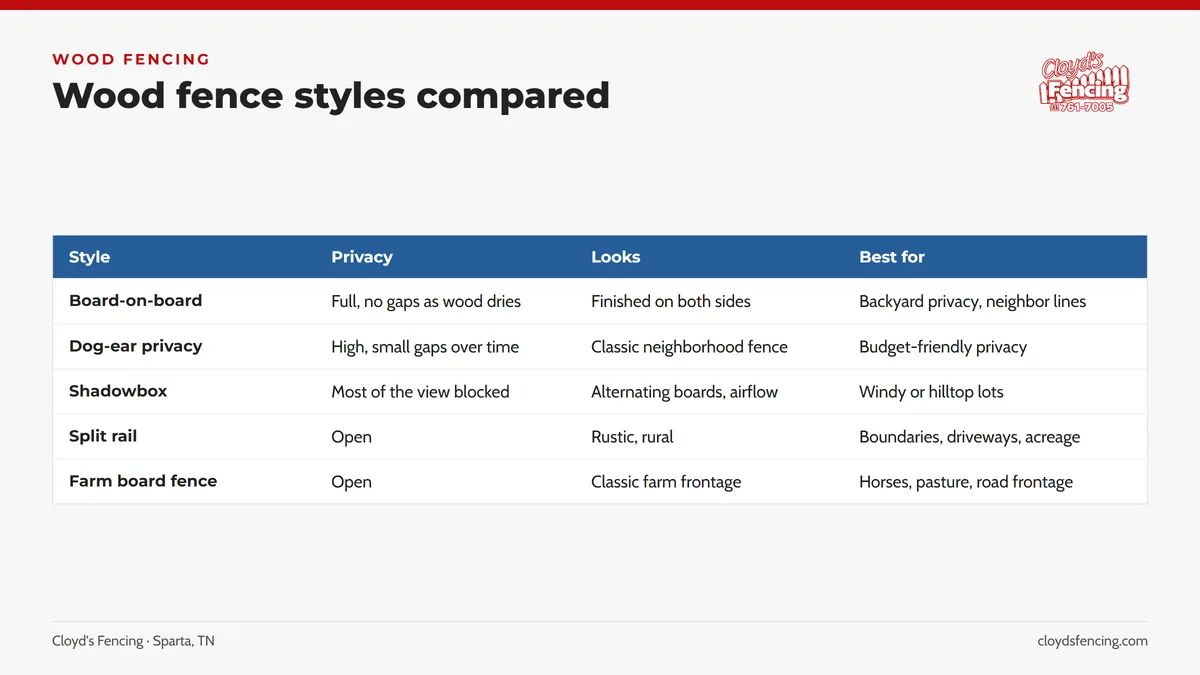
Each wood style balances privacy, airflow, and cost a little differently. Board-on-board and dog-ear block the view, shadowbox lets the breeze through, and split rail and board fence mark the line without closing it in.
Board-on-Board Privacy Fence
Board-on-board is the strongest choice when you want full privacy. The pickets overlap on alternating sides of the rail, so there are no gaps to see through, even after the wood shrinks as it dries. It looks finished from both sides, which keeps neighbors happy, and it’s the style we recommend most often for backyards.
Dog-Ear Privacy Fence
A dog-ear fence uses pickets with clipped top corners, set side by side. It’s the classic 6-foot privacy fence you see across Tennessee neighborhoods, and it’s usually the most budget-friendly way to get privacy. Expect small gaps to open between boards over time as the wood dries.
Shadowbox Fence
Shadowbox alternates pickets on each side of the rail with a small space between them. It lets air move through, which helps on windy hilltops, and still blocks most of the view.
Split Rail and Farm Board Fence
Split rail and board fences mark a boundary or frame a property without closing it in. They’re a natural fit for farmhouses, long driveways, and acreage. Add wire mesh to the back, and they’ll keep a dog in too. For pasture and livestock fencing, see our farm and agricultural fencing page.
How We Build a Wood Fence That Stays Straight
A wood fence fails at the posts long before the boards wear out. That’s where we spend our time:
- Ground-contact posts. Posts are rated for direct contact with the soil, sized for the fence height, and set deep enough for the ground they’re in.
- Upper Cumberland soil and slope. Rock, clay, and hillsides are normal here. We plan post spacing and stepping or racking on slopes so the fence follows your yard instead of leaving gaps underneath.
- Straight lines and solid gates. Gates get heavier posts and hardware, so they don’t sag after the first year.
- Clean finish. Tops are kept level, boards are fastened tight, and the job site is cleaned up when we leave.
Most residential wood fences take one to three days to install, depending on length, terrain, and the number of gates.

Permits, HOAs, and Property Lines
Many cities and HOAs limit fence height, especially in front yards, and some require a permit for a 6-foot fence or taller. Before we set the first post, we’ll help you check your local rules and where your property line sits. Our guides to Tennessee fence permit requirements and how close a fence can be to the property line cover the details.
Wood or Something Else?
Wood costs less up front than vinyl or aluminum and is easy to repair, but it needs a stain or sealer every few years to look its best. If you’d rather not maintain it, vinyl fencing gives you the same privacy with almost no upkeep. If you want a see-through, decorative look, consider aluminum fencing. For a business that needs privacy screening, see our commercial fencing page.
Frequently Asked Questions
How tall can a wood privacy fence be?
Six feet is the most common height for a backyard privacy fence in Tennessee, and many cities allow it in side and rear yards without special approval. Front yards are often limited to 3 to 4 feet, and fences taller than 6 feet usually need a permit. Always check with your city, county, and HOA.
What’s the difference between board-on-board and a regular privacy fence?
A regular dog-ear privacy fence sets pickets side by side, so small gaps can open as the wood dries. Board-on-board overlaps the pickets on both sides of the rail, so the fence stays fully private and looks finished from either side.
How long does a wood fence last?
A well-built wood fence lasts many years. How long yours lasts depends on the posts, the wood, how well it drains, and whether it’s stained or sealed. Rot almost always starts at the posts, which is why we put so much care into setting them.
Do you repair or replace existing wood fences?
Yes. We replace leaning or rotted posts, broken boards, and sagging gates, and we replace whole fences when a repair won’t hold.
Let’s Talk About Your Wood Fence
Tell us about your property and what you need the fence to do, and we’ll give you a clear, straightforward estimate. No generic pricing. Every quote is based on your yard. For residential projects, call us at 931-761-7005 or send us a message.