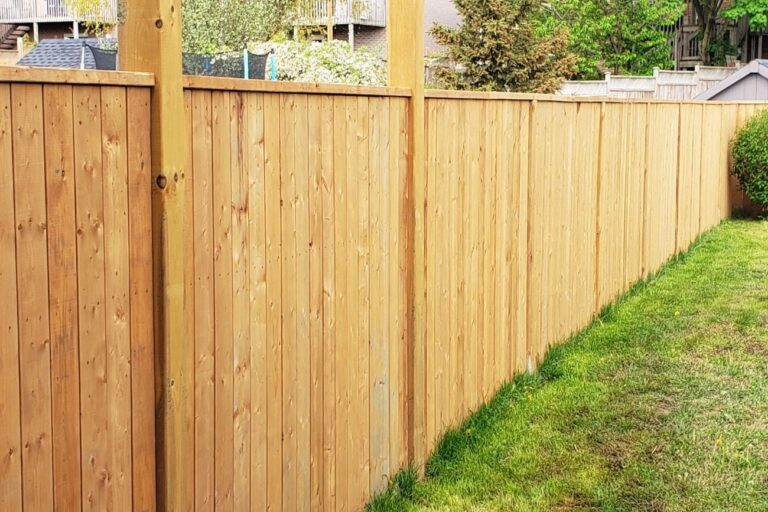
Building a fence in Tennessee involves more than choosing materials and setting posts. From state laws to local regulations and specific permit requirements, there are legal steps property owners need to understand before starting. And regardless if you’re installing a wood privacy fence in Cookeville, a chain-link fence for a commercial property in Sparta, or a decorative white picket fence in a residential neighborhood in the Upper Cumberland, knowing the rules ahead of time will save you time, money, and potential disputes.
In this guide, we’ll answer common questions like:
- Do I need permission for a 6ft fence?
- Can I put up an 8ft fence?
- Do I need a contractor to build my fence?
- How far does a fence have to be from the property line in Tennessee?
We’ll also cover fence permits, height restrictions, local building codes, homeowners’ association requirements, and tips for avoiding common mistakes.
If you want more detail about property line setbacks, check out our guide on how far a fence can be from the property line in Tennessee — it’s a helpful companion to this post.
Understanding Fence Permits in Tennessee
When Do You Need a Fence Permit?
Fence permits are not required for every project in Tennessee. And whether or not you need a permit depends on your city, county, subdivision, or homeowners’ association (HOA) regulations. Generally, permits are more likely required for:
- Fences above a certain height, usually 6ft or more.
- Fences in front yards, or fences that block visibility on corner lots.
- Commercial properties or accessory structures.
- Locations within historic districts or near public buildings.
Each municipality has its own codes department or building department that sets fence requirements, setback regulations, and maximum heights. Before digging, contact your local department to confirm what permits are necessary for your new fence or fencing project.
Do I Need Permission for a 6ft Fence?
Many residential fences in Tennessee can be up to 6ft tall without special permission, but this varies by city or subdivision. Front yard fences are often limited to 3–4 feet, while side and rear yards typically allow 6–8 feet for privacy or security.
- Always check with your local building department.
- Ask your HOA if applicable — some communities have stricter rules than city or county codes.
- Remember that corner lots may have additional restrictions for sightlines and visibility.
If your fence is right along the property line, it may be considered a boundary fence or partition fence, which could require neighbor consent.
Can I Put an 8ft Fence Up?
Yes, but almost always with a permit and inspection. Fences taller than 6ft often require approval to ensure safety, structural integrity, and compliance compliance with state law and local ordinances. Taller fences may also need engineering or reinforcement, especially for heavy wood or masonry fences.
Important: Even if your city allows 8ft fences, your HOA or subdivision covenants may restrict height or require certain materials.
Do I Need a Contractor to Build a Fence?
You don’t have to hire a general contractor, but there are advantages:
DIY Fencing
- Saves money if you’re comfortable with tools, measurements, and digging posts.
- Must follow permit requirements, property line setbacks, and local building codes.
- Need knowledge about drainage, soil type, and fence materials to avoid long-term issues.
Hiring a Professional
- Ensures compliance with local regulations, HOA rules, and state law.
- Proper installation improves longevity, stability, and safety.
- Contractor often handles permits, site plan submissions, and inspections
- Peace of mind knowing legal rights and responsibility of the property owner are respected
For most Tennessee property owners, hiring an experienced contractor is worth it, especially if your fence is large, complex, or near property boundaries.
How Far Does a Fence Have to Be from the Property Line in Tennessee?
Fence setbacks depend on local ordinances, HOA rules, and the type of fence.
- Front yard: Usually 3–4ft maximum for visibility and safety.
- Side yard: 0–12 inches is typical, but some municipalities require more.
- Rear yard: Often no setback, but check local regulations.
Utility easements, natural drainage, or neighbor disputes can also affect placement. If you want more detail, our property line guide covers exact setbacks, corner lots, and partition fences in Tennessee.
Always check with the planning department before starting your project, especially near utility easements or public utilities.
Other Local and State Considerations
- Accessory structures: If your fence includes gates with electrical work, lighting, or storage elements, additional permits may be required.
- Property in historic districts: May have specific restrictions on materials, height, or style.
- Drainage and terrain: Sloped or poorly draining yards require careful planning to avoid future damage.
- Agricultural or boundary fences: Special regulations may apply for livestock or farming purposes.
Even simple fences can be complicated if you don’t account for property rights, setback requirements, and neighbor agreements.
Fence Materials, Placement & What to Plan For
The type of fence materials you choose does more than change the look of your property. It can affect fence height, maximum height, setback requirements, placement along the property line, and if a fence permit or other necessary permits are required under local regulations, building codes, and Tennessee law.
Before starting a new fence or other fencing projects, it’s important for property owners to understand how different materials perform in Tennessee soil, weather, and drainage conditions.
Wood Fences
Wood remains one of the most popular fence materials for residential properties, whether you’re installing a privacy fence or a classic white picket fence.
Posts are typically 4×4 or 6×6 depending on height and soil conditions, with standard spacing of 6 to 8 feet between posts. When building along a property line or boundary line, it’s wise to verify property boundaries and check for any drainage easement or utility easement before digging.
Because wood requires maintenance, many property owners leave space on their side of the fence for access and upkeep to keep the structure in good condition and good repair.
Chain Link Fences
Chain link fences are flexible, economical, and durable. They can often be installed closer to the property line than solid fences, though posts still require proper concrete footings to meet specific requirements under local building codes.
This style works well in a front yard or backyard setting, depending on local ordinances, HOA rules, or specific restrictions within a homeowners association or neighborhood governed by subdivision covenants.
Wire or Electric Fences
Wire or electric fences are common for agricultural purpose properties and large boundary installations such as a boundary fence or partition fence.
These installations may require an electrical permit for any electrical work, and contacting Tennessee One-Call is a critical first step before digging to avoid damaging a public utility line. Some jurisdictions may also require review by the local building department, planning department, or codes department depending on location within city limits.
Masonry or Concrete Fences
Masonry and concrete fences are heavy, durable, and excellent for security and privacy. Because of their weight and structural demands, they may require a residential building permit, engineering review, and compliance with the International Residential Code and standards from the International Code Council.
In some historic districts or commercial district areas, additional review may be required to ensure compliance with local regulations and zoning code provisions.
Terrain, Drainage & Soil Factors
Material choice is only part of the equation. Tennessee terrain plays a major role in fence performance and long-term stability.
• Sloped ground may require adjusted post depth to meet fence requirements and maintain structural stability.
• Poor drainage conditions or areas with natural drainage patterns may require reinforced concrete footings.
• Clay-heavy soil can shift over time, affecting structural integrity and the responsibility of the property owner to maintain the fence in good repair.
Understanding these conditions helps ensure your fence remains compliant with local regulations, protects your property rights, and avoids future fence disputes.
| Material | Typical Height | Placement Notes |
|---|---|---|
| Wood | 3–8 ft | Requires spacing for maintenance; posts need depth for stability |
| Chain Link | 3–8 ft | Can sit closer to property line; posts need proper footings |
| Vinyl | 3–8 ft | Low maintenance; may require permits for solid privacy styles |
| Masonry / Concrete | 4–8 ft | Often requires a permit; heavier and may need engineering |
Material choice affects permit requirements, HOA compliance, and property line placement. Make sure to consult local codes before deciding.
Common Mistakes to Avoid
- Skipping a survey: Never assume your property line, even a few inches can cause disputes.
- Ignoring permits or codes: Skipping this step may result in fines or removal orders.
- Incorrect post depth/spacing: Weak posts can tilt or fall.
- Ignoring HOA rules: Some subdivisions have strict fence materials, height, or placement rules.
- Poor drainage planning: Avoid rot, shifting, and structural issues.
- Neglecting maintenance access: Leaves fences vulnerable to rot or damage
Proper planning prevents legal issues, neighbor disputes, and long-term maintenance problems.
Tips for a Smooth Fence Project
- Check local building codes and permit fees before starting.
- Talk to neighbors about your plans for boundary fences.
- Consider terrain, soil type, and drainage when selecting materials.
- Decide between DIY or hiring a licensed contractor.
- Ensure your fence complies with state law, city ordinances, and HOA rules.
Following these steps ensures your fence is safe, legal, and built to last.
FAQs: Tennessee Fence Permits & Regulations
What is the maximum fence height allowed?
Fence height rules vary depending on city limits, local ordinances, and lot location. Corner lots may have additional visibility restrictions. Check with your planning department or metro codes.
Do I need a certificate of occupancy for a new fence?
Usually not, but necessary permits like a residential building permit may be required. Some cities require a site plan for fences over a certain height.
Can fences be built over drainage easements or near utilities?
No. Always respect drainage easements, utility easements, and public utilities. Contact Tennessee One-Call before digging.
Are there special rules for agricultural or boundary fences?
Yes. Fences for agricultural purposes or along boundary lines may require neighbor consent and compliance with state law and local ordinances.
Do fences with electrical gates or lighting require permits?
Yes. Fences with electrical work require electrical permits and inspections.
Can fences be installed on corner lots or commercial districts?
Yes, but corner lots often have setback requirements, and commercial districts may require a site plan or additional approvals.
Are there rules for storage buildings, sheds, or accessory structures near fences?
Yes. Storage buildings or tool sheds may need building permits, and placement must not interfere with utility easements.
Do homeowners’ associations affect fencing projects?
Absolutely. HOAs can dictate materials, height, placement, and style. Ignoring these rules may result in fines.
What is the first step when planning a new fence?
Confirm your property boundaries at the register of deeds office, then check with the planning department for permit requirements, inspections, and specific regulations.
Are there considerations for minor repairs or open fences?
Repairs affecting structural integrity may require permits. Even open fences must meet height, setback, and material requirements. Maintaining your fence in good repair is the responsibility of the property owner.
Conclusion
Building a fence in Tennessee is more than digging posts and attaching boards. You need to understand permit requirements, property line setbacks, local regulations, HOA rules, and fence materials to avoid fines, disputes, and costly mistakes.
And if you’re planning a 6ft wood privacy fence, an 8ft masonry barrier, or a simple chain-link enclosure, careful planning and adherence to Tennessee law ensures a smooth project.
For property owners in Sparta, Cookeville, and the Upper Cumberland region, consulting with a professional contractor can save time, money, and headaches. And don’t forget to check out our property line guide for specific setback information.
If you’re ready to build a fence that’s safe, legal, and built to last, contact Cloyd’s Fencing. Our team handles permits, materials, and expert installation so your fence stands strong for years to come.
Author Note: This post was written by Kacie Barlow, Digital Operations & Growth Manager at Cloyd’s Fencing.