A security fence slows an intruder down, makes climbing or cutting through hard, and funnels every person and vehicle through a gate you control. No fence stops a determined intruder forever. A good security fence makes your property a harder target than the one down the road, and buys time for cameras, lighting, and people to do their part.
If you manage a warehouse, storage facility, equipment yard, or industrial site in Sparta, Cookeville, or the Upper Cumberland, this guide covers the main types of security fencing and how to plan a perimeter that works. It’s part of our series on choosing commercial fencing.
What Makes a Fence a Security Fence?
Any fence marks a boundary. A security fence is built to resist someone who wants to get past it. That usually comes down to five things:
- Height: taller fence, usually 7 to 8 feet or more with a topper where local rules allow
- Climb resistance: small mesh openings or vertical pickets with no footholds
- Cut resistance: heavier wire and stronger materials
- A secure bottom: no gaps at grade where someone can crawl under or pull the fabric up
- Controlled gates: the fewest openings possible, each one locked or automated
The Main Types of Security Fencing
Chain Link With Barbed Wire
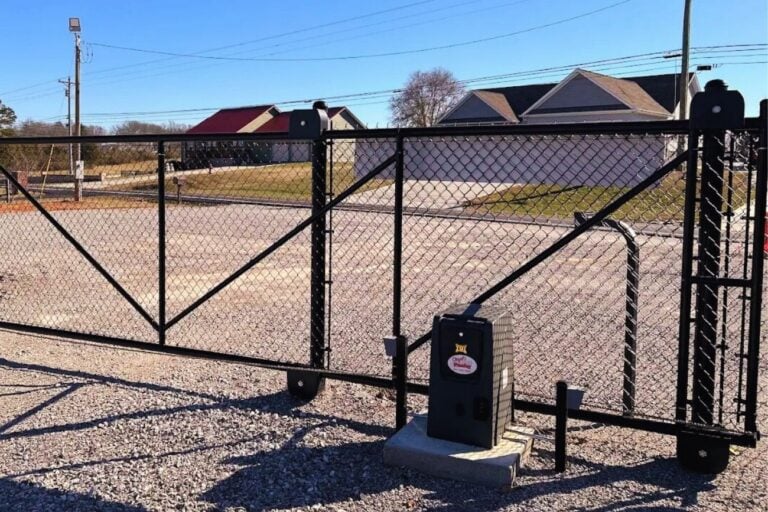
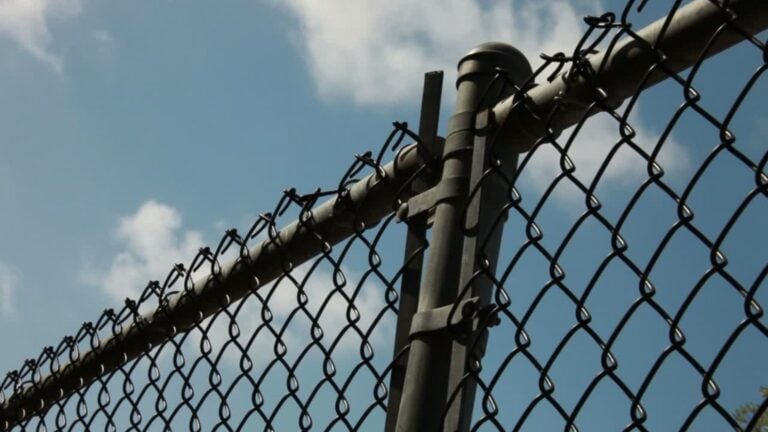
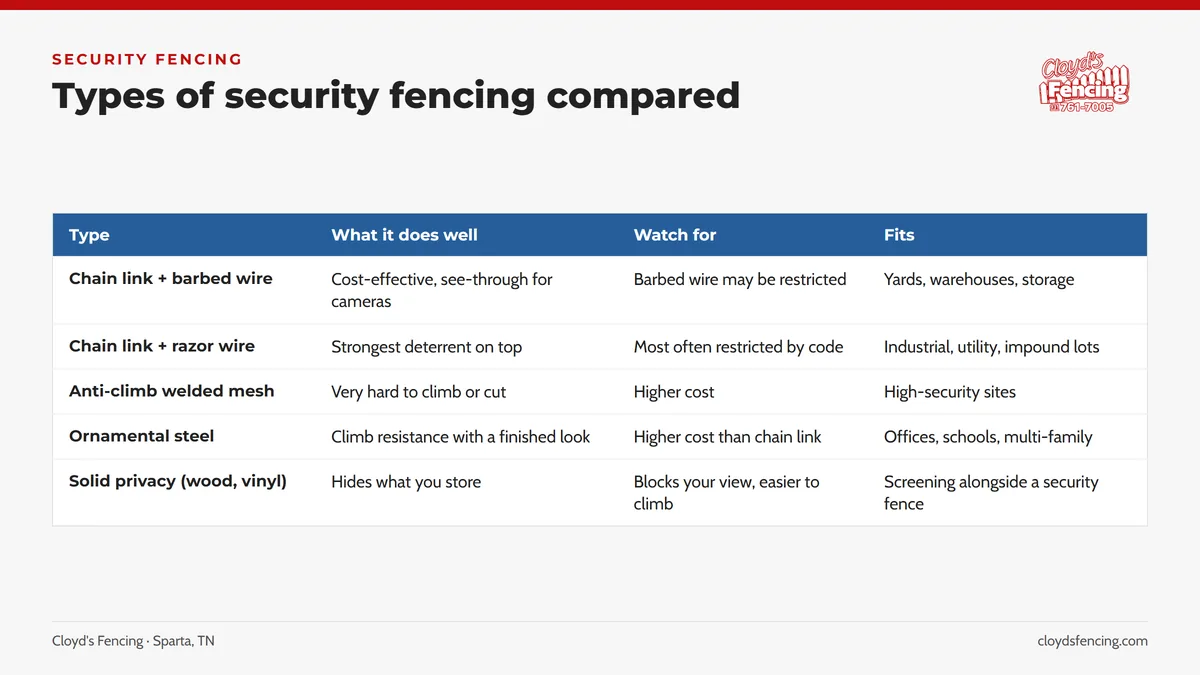
This is the most common commercial security fence, and for good reason. Heavy-gauge commercial chain link with three strands of barbed wire on angled extension arms adds height and makes climbing a lot harder. It’s cost-effective and see-through, so cameras and patrols can watch the yard.

Chain Link With Razor Wire
Razor wire (also called concertina wire) is a coil of sharp-edged wire mounted on top of the fence. It’s a stronger deterrent than barbed wire, which is why it shows up around industrial yards, utility sites, and impound lots. It’s also the option most likely to be restricted by local code, so check with your city or county before you plan on it.
Anti-Climb Welded Mesh
Anti-climb fencing uses welded steel panels with very small openings, too small for fingers or toes. It’s much harder to climb or cut than standard chain link, and it costs more. You’ll see it around data centers, utilities, and other high-security sites.
Ornamental Steel
Ornamental steel fencing with vertical pickets and no horizontal rails near the top gives you real climb resistance and a finished look. It’s a strong choice for office buildings, schools, apartment complexes, and storefronts, where the fence needs to secure the property without looking like a prison yard. Spear or pressed-point picket tops add deterrence.
Solid Privacy Fencing
A solid wood or vinyl fence hides what you’re storing, and that alone removes a reason for someone to try. But a solid fence also blocks your own view, gives an intruder cover once they’re over, and doesn’t resist climbing or cutting as well as steel. On security jobs, it works best as screening along with a stronger fence, not as the main barrier.
How Tall Should a Security Fence Be?
Most commercial security fences fall between 7 and 10 feet, counting the topper. A common setup is a 7-foot chain link fence with a 1-foot barbed wire extension, for 8 feet total.
Height is also where local rules come in. Many zoning codes cap fence height by district and limit barbed or razor wire to commercial or industrial zones, often only above a certain height. Our guide to Tennessee fence permit requirements explains how to check. For commercial property, always confirm with your local planning or codes department before you order materials.
Plan the Whole Perimeter, Not Just the Fence
The fence is one layer. These choices around it matter just as much:
- Keep the fence line clear. Trees, dumpsters, pallets, and parked trailers next to the fence are ladders. Leave a clear zone on both sides.
- Close the bottom. Use a bottom rail or tension wire, and keep the fabric close to grade. Where the ground dips, fill the gap or add fence fabric below.
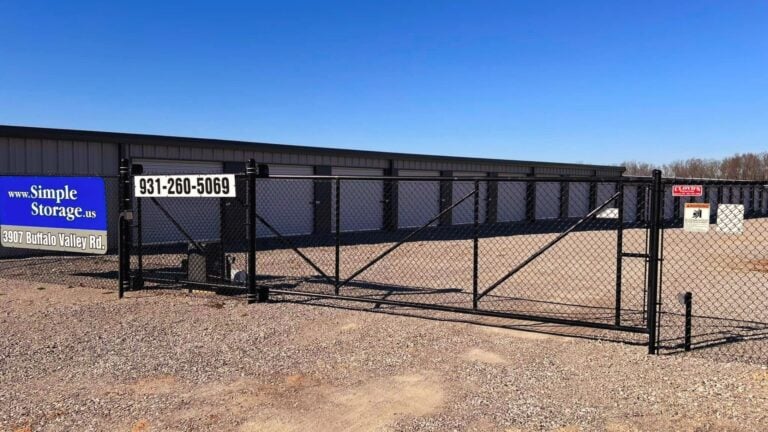
- Limit the gates. Every gate is a weak point. Use as few as the property can work with, and secure each one.
- Light it and watch it. A see-through fence works best with lighting and cameras that can cover the fence line.
- Think about slope and drainage. In the Upper Cumberland, rolling ground and runoff can open gaps under a fence over time. A good install plans for it.
Important: A security fence is only as strong as its weakest gate. Read our guide to commercial gates and access control before you finalize your layout.
Security Fencing From a Local, Veteran-Led Team
Cloyd’s Fencing is a family-owned, veteran-led fence company based in Sparta. We install commercial security fencing, chain link with barbed wire, ornamental fencing, and automatic gates for businesses, storage facilities, industrial sites, and municipal properties across Middle Tennessee.
If you’re planning a secure perimeter, request a commercial fence estimate. Tell us what you’re protecting and the approximate length of fence, and we’ll walk the property with you and recommend the right setup.