Commercial chain link is built from heavier wire, larger posts, and stronger rails than residential chain link, and it’s set in deeper footings. It looks like the same fence from a distance. Up close, it’s a different product, and it’s the reason a commercial fence stays tight and straight years after a lighter one starts to sag.
If you’re comparing quotes for a warehouse, storage lot, or equipment yard, these are the details that separate one chain link bid from another. This guide is part of our series on choosing commercial fencing.
Wire Gauge: Why Lower Numbers Mean Stronger Fence
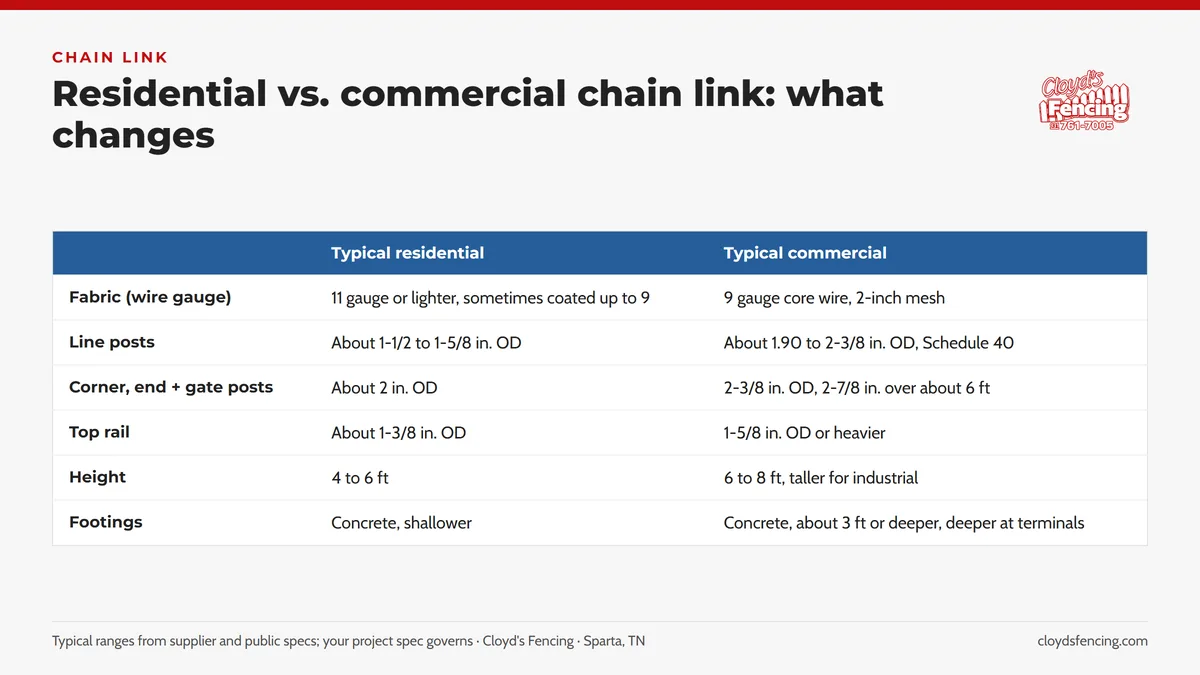
Chain link fabric is measured by wire gauge, and the lower the number, the thicker the wire. Commercial work most often uses 9-gauge fabric. Lighter residential fabric is often 11 gauge or thinner.
Supplier Hoover Fence explains one catch to watch for: some residential vinyl-coated fabric is 11-gauge wire coated up to a 9-gauge thickness. It can be sold as “9 gauge” even though the steel inside is lighter. On a commercial quote, ask whether the gauge refers to the core wire or the finished, coated wire.
Most commercial chain link uses a 2-inch mesh, the size of the diamond openings. Smaller mesh is harder to climb and cut, which matters for security fencing. We cover that in our guide to security fencing for commercial properties.
Posts, Top Rail, and Footings
The fabric gets the attention, but the framework is what holds a commercial fence up.
- Line posts run along the fence between the ends. Commercial specs commonly call for Schedule 40 steel pipe around 1.90 inches in outside diameter. The New York State master specification for chain link fences is one example.
- Terminal posts (corners, ends, and gates) take the most strain and are larger, often 2-3/8 inches. For fences over about 6 feet, that same spec steps them up to 2-7/8 inches.
- Top rail runs along the top and keeps the fabric from sagging between posts.
- Bottom tension wire or bottom rail keeps the fabric tight at grade, so nobody can push under it.
- Footings are concrete. Commercial specs typically set posts around 3 feet deep or more, with terminal posts going deeper. Fence height, soil, and slope all change that.
Important: Post size and footing depth are where a cheap commercial bid usually cuts corners. Always ask for them in writing.
How Tall Should a Commercial Chain Link Fence Be?
Most commercial chain link runs 6 to 8 feet. Taller fence, 10 or 12 feet, shows up around industrial sites and sports facilities. A 1-foot barbed wire extension on top adds height for security.
Two things limit your height:
- Local zoning. Many cities cap fence height by zoning district. Check with your city or county before you plan an 8-foot fence. Our guide to Tennessee fence permit requirements explains how permits and height limits usually work.
- The framework. Taller fence catches more wind, so it needs larger posts and deeper footings.
Galvanized or Black Vinyl-Coated?
You’ll choose between two finishes:
- Galvanized chain link is the classic silver fence. The zinc coating protects the steel, and it’s the most cost-effective option for industrial yards and back-of-property runs.
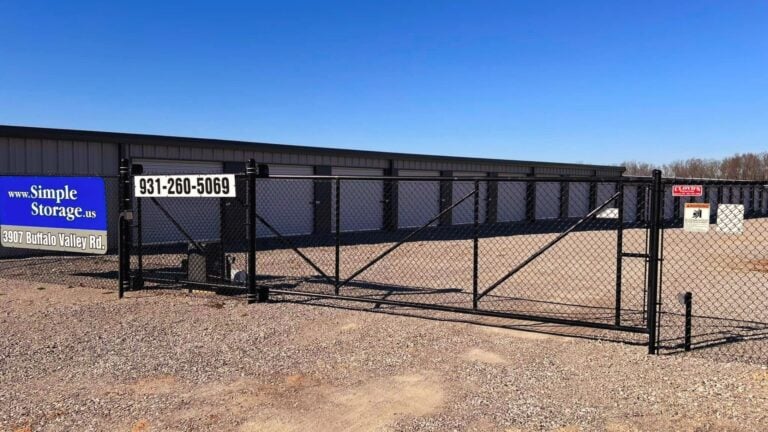
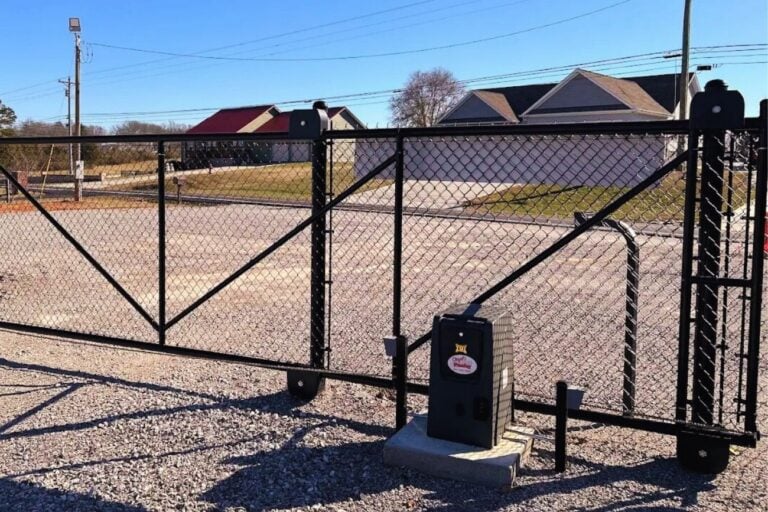
- Black vinyl-coated chain link adds a polymer coating over galvanized wire. It blends into the background, looks cleaner from the street, and is a common pick for storage facilities, office parks, schools, and apartment complexes. The posts and rails are powder-coated to match.

We installed the black chain link perimeter and automatic slide gate at the self-storage facility above. The black finish keeps the fence secure without looking industrial from the road.
Privacy Slats and Screening
Chain link is see-through by design. When you need to hide equipment, materials, or a dumpster area from the street, you have two common options:
- Privacy slats slide vertically through the mesh and block most of the view.
- Windscreen fabric attaches to the fence for a full visual screen. It also catches wind, so the fence framework has to be built for that load.
If you need full privacy from the start, a wood or vinyl fence may be the better choice. Our commercial fencing guide compares those options.
Adding Barbed Wire
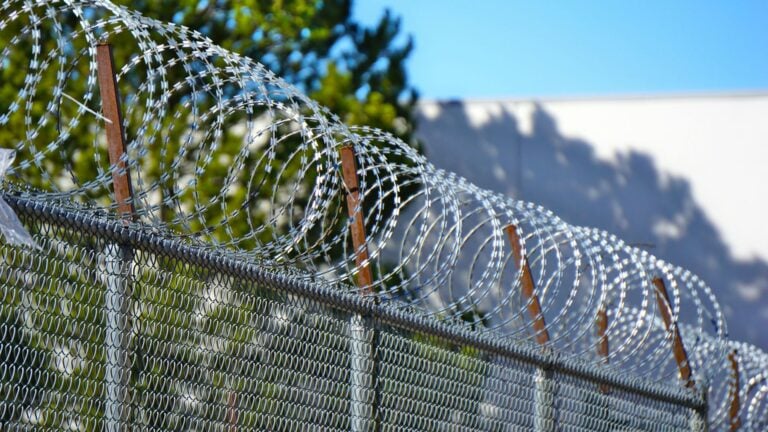
For yards that need security, barbed wire on top of a chain link fence is one of the most common upgrades. It’s mounted on extension arms angled outward, usually at 45 degrees, with three strands of wire. The North Carolina DOT’s fence specification puts the top strand about 12 inches above and 12 inches out from the top rail.
Barbed wire and razor wire are often restricted by local code, especially near homes or public sidewalks. Check before you plan on it. Our security fencing guide covers barbed wire, razor wire, and other security options.
How Long Does Commercial Chain Link Last?
A well-built commercial chain link fence lasts for decades. How long yours lasts depends on three things:
- The coating: the galvanizing class, plus the vinyl coating if you choose it
- The framework: proper post size and footings keep the fence from leaning and sagging
- Damage and upkeep: vehicles, fallen limbs, and loose tension bands shorten a fence’s life fast if no one fixes them
When a chain link fence starts leaning or sagging early, the cause is usually the framework or a vehicle, not the fabric wearing out.
Get a Commercial Chain Link Quote
Cloyd’s Fencing installs galvanized and black vinyl-coated commercial chain link, with gates, slats, and barbed wire, for businesses across Sparta, Cookeville, and the Upper Cumberland. We work with trusted suppliers like Master Halco for chain link and specialty fencing.
If you’re planning a chain link fence for your business, request a commercial fence estimate. Tell us the approximate length, the height you need, and what the fence has to do, and we’ll put together a clear, itemized quote.